Vitamin treatments have become a popular addition to many aesthetic, wellness and medical-led clinic services. However, many patients and practitioners still ask the same question: IM vs IV vitamins – what is the difference?
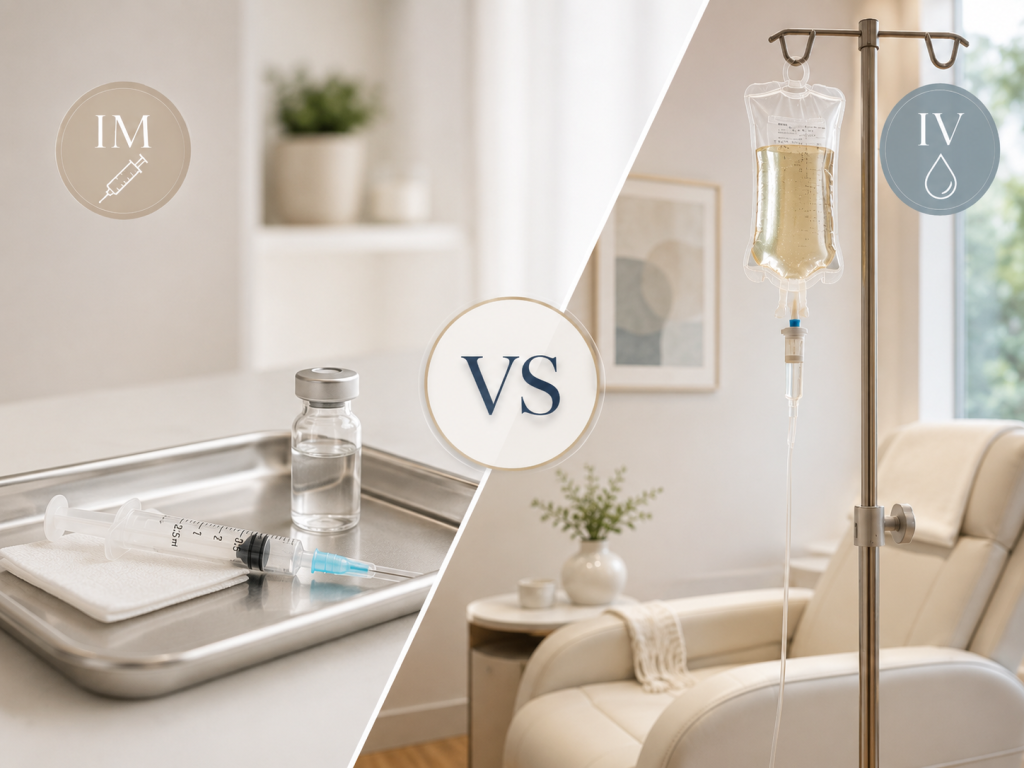
Both options involve vitamin-based treatments, but clinics administer them in different ways. IM vitamins go into the muscle, while IV vitamins go into a vein through an infusion. This difference affects appointment time, treatment setup, practitioner training, patient suitability and aftercare.
For clinics, it is important to explain these differences clearly. Patients should understand what each option involves, and practitioners should only provide treatments after a proper consultation and suitability assessment.
This guide explains IM vs IV vitamins in a practical, clinic-focused way. It also covers safe practice, responsible marketing, product sourcing and record keeping.
What Does IM Mean?
IM stands for intramuscular. This means the practitioner administers the vitamin product into a muscle using an injection.
Clinics often offer IM vitamin appointments as shorter wellness treatments. The appointment may include consultation, consent, administration, aftercare advice and treatment documentation.
Although IM treatments can seem simple, clinics should still follow safe clinical processes. Practitioners should check the patient’s medical history, allergies, current medicines and treatment expectations before proceeding.
A clinic that offers IM vitamins should also have clear systems for product storage, sharps disposal, infection control, batch recording and adverse event management.
What Does IV Mean?
IV stands for intravenous. This means the practitioner administers the product into a vein, usually through an infusion.
IV vitamin appointments often take longer than IM appointments. The patient usually remains seated or reclined while the infusion takes place. The practitioner may also need to monitor the patient during the treatment.
Because IV treatments involve venous access, clinics need strong clinical governance. Practitioners must have suitable training and should work within their competence.
Clinics should also create written procedures for consultation, consent, preparation, administration, monitoring and aftercare.
For general public information about vitamins and minerals, clinics can signpost patients to reliable sources such as the NHS vitamins and minerals guidance:
https://www.nhs.uk/conditions/vitamins-and-minerals/
IM vs IV Vitamins: Key Differences
The main difference between IM vs IV vitamins is the route of administration.
With IM vitamins, the practitioner administers the product into a muscle. With IV vitamins, the practitioner administers the product into a vein through an infusion.
This difference affects how clinics plan appointments.
IM vitamin appointments may take less time. They may also need less treatment-room setup than IV infusions. However, clinics still need trained practitioners, clear protocols and appropriate patient screening.
IV vitamin appointments usually require more time, equipment and monitoring. Clinics may also need more clinical space and a more detailed treatment setup.
From a clinic management point of view, IV services often need more planning. Practitioners must consider venous access, patient comfort, monitoring, infection control and emergency procedures.
IM Vitamin Injections vs IV Vitamin Infusions: Patient Suitability
Patient suitability matters for both IM vitamin injections and IV vitamin infusions.
Clinics should not treat vitamin services as a one-size-fits-all option. Every patient should have an individual consultation before treatment.
A consultation may include questions about:
- – Medical history
- – Allergies
- – Current medicines
- – Pregnancy or breastfeeding
- – Previous reactions
- – Needle-related anxiety
- – Treatment expectations
- – Existing health concerns
Practitioners should also know when not to treat. In some cases, the safest decision may involve delaying treatment or advising the patient to speak to their GP or another healthcare professional.
Safety Considerations for IM and IV Vitamin Treatments
Clinics should put safety at the centre of every IM and IV vitamin treatment.
Before offering either service, clinics should make sure practitioners have suitable training. They should also create clear written protocols for each stage of the patient journey.
Good protocols should cover:
- – Consultation
- – Consent
- – Product checks
- – Storage requirements
- – Infection control
- – Treatment administration
- – Patient monitoring
- – Aftercare advice
- – Adverse event procedures
- – Record keeping
Practitioners should check the product name, batch number and expiry date before treatment. They should also record these details in the patient notes.
Clear documentation protects the patient, the practitioner and the clinic. It also supports traceability if a product query or safety concern arises later.
Product Sourcing for IM and IV Vitamins
Responsible product sourcing plays a key role in safe clinic practice.
Clinics should source IM and IV vitamin products from reputable suppliers. They should avoid unknown, informal or unverified sources. Price should not be the only factor when clinics choose products for patient treatments.
A reliable supplier helps clinics maintain product traceability. The clinic should know where the product came from, when it arrived, how staff stored it and which patient received it.
Clinics should record:
- – Product name
- – Batch number
- – Expiry date
- – Supplier details
- – Treatment date
- – Practitioner name
- – Treatment route
- – Patient consent
- – Aftercare advice
These records help clinics respond quickly if a patient has a question or if a product issue occurs.
Which Option Should a Clinic Offer?
The right option depends on the clinic’s setup, practitioner training, patient demand and governance processes.
Some clinics may start with IM vitamin injections because they often involve shorter appointments and a simpler treatment setup. Other clinics may offer IV vitamin infusions if they have trained practitioners, suitable clinical space and strong protocols in place.
Some clinics may offer both. However, clinics should only introduce a service when they can provide it safely and professionally.
Before adding IM or IV vitamins to a treatment menu, clinics should ask:
- – Do our practitioners have the right training?
- – Do we have suitable treatment protocols?
- – Can we manage adverse reactions?
- – Do we have appropriate insurance?
- – Can we store products correctly?
- – Can we keep clear treatment records?
- – Do our marketing claims remain responsible?
These questions help clinics build a safe and professional wellness service.
Final thoughts
When comparing IM vs IV vitamins, the main difference is how the practitioner administers the treatment. IM vitamins go into the muscle. IV vitamins go into a vein through an infusion.
However, clinics should look beyond the route of administration. They should also consider consultation, training, appointment time, treatment setup, patient suitability, documentation, product sourcing and aftercare.
Both IM and IV vitamin services need a responsible, patient-centred approach. Clinics should avoid exaggerated claims, assess every patient individually and source products through reliable professional channels.
Aesthetics Rx Pharma supports trained practitioners and clinics with access to a carefully selected range of aesthetic and wellness products through a professional, pharmacy-led supply service.
Ready to add vitamin treatments to your clinic offering?
Explore our professional range of IM and IV vitamin products here: Shop IM & IV Vitamins